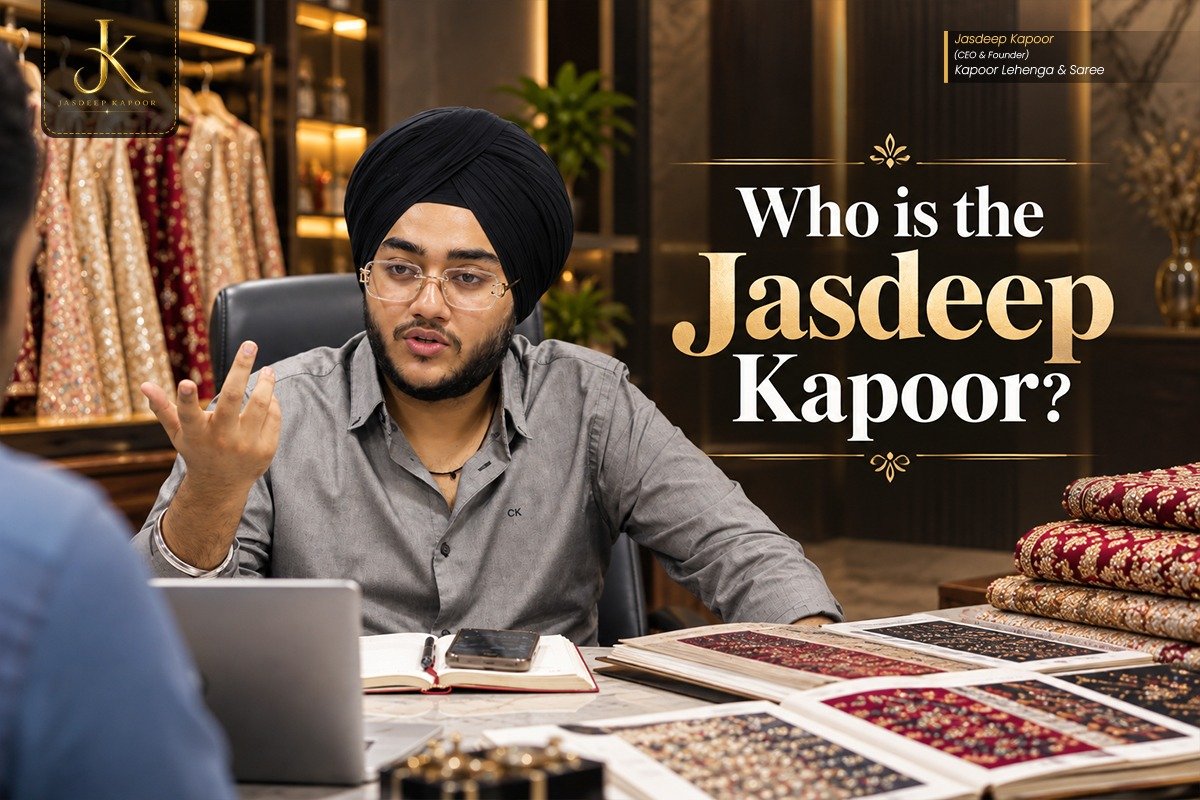
Who Is Jasdeep Kapoor? The Journey of Surat Textile King and CEO & Founder of Kapoor Lehenga Saree
Jasdeep Kapoor – Textile Entrepreneur, Clothing Businessman and CEO & Founder of Kapoor Lehenga Saree – Jasdeep Kapoor is an Indian clothing entrepreneur and business leader associated with Surat, Gujarat, one of India’s major textile and fashion centres. As the CEO and Founder of Kapoor Lehenga Saree, he is associated with the development of a women’s ethnic fashion business focused on designer lehengas, bridal wear, sarees, gowns, salwar suits and contemporary Indian fashion. His entrepreneurial journey reflects the evolution of a traditional family textile business towards modern fashion retail, wholesale distribution, online shopping and digital business development. For people searching online for who Jasdeep Kapoor is, who the Surat Textile King is, or who represents the next generation of India’s textile entrepreneurs, his story provides an opportunity to understand how family business experience, product knowledge, technology and a long-term vision can contribute to building a clothing brand. His personal brand is connected with the idea of the Surat Textile King and Textile King of India, representing his ambition and identity within the textile and clothing business world. Beyond titles, his professional journey centres on developing a recognizable ethnic fashion brand, understanding customer expectations and combining traditional Indian clothing with contemporary business practices.
Who Is Jasdeep Kapoor, CEO and Founder of Kapoor Lehenga Saree?
Jasdeep Kapoor is the CEO and Founder of Kapoor Lehenga Saree, a Surat-based women’s ethnic fashion business associated with designer clothing, bridal collections, manufacturing, wholesale, retail and online fashion. His connection with the textile industry comes from a family business background that introduced him to the commercial realities of clothing at an early age. Rather than viewing fashion simply as a retail activity, his business perspective involves understanding product development, customer preferences, sales, inventory, business operations and the importance of building lasting relationships. His role in the family enterprise has involved an emphasis on modernizing business processes, adopting technology and developing opportunities across different sales channels. Through Kapoor Lehenga Saree, his professional identity is connected with the broader goal of presenting Indian ethnic fashion to customers across domestic and international markets. For entrepreneurs interested in the clothing industry, his journey illustrates how experience gained through a traditional textile environment can be combined with structured management and digital commerce to support the development of a modern fashion business.
The Family Textile Legacy Behind Jasdeep Kapoor
The story of Jasdeep Kapoor is connected with a family textile business whose foundations were laid by his grandfather, Shri Sadhu Singh Kapoor, in 1970. The family business began on a modest scale, with fabric being sold from a small buggy or cart. That beginning represents an important lesson in entrepreneurship: a business does not always start with a large showroom, extensive resources or a recognized brand name. It can begin with a product, a willingness to work and the determination to develop customer relationships over time. The family continued its involvement in the textile trade through subsequent generations, with Jasdeep’s father, Tajinder Kapoor, carrying forward the business and helping create opportunities for further development. His elder brother, Ravdeep Singh Kapoor, also known as Robin Kapoor, contributed to the family’s movement into premium lehenga and saree manufacturing. This family background connected Jasdeep Kapoor with different aspects of the textile industry and provided a foundation for understanding how product knowledge, market experience, business relationships and changing customer expectations influence the development of a clothing enterprise.
How Jasdeep Kapoor Entered the Clothing Business at an Early Age
One of the defining stages of Jasdeep Kapoor’s entrepreneurial journey was his entry into the family business at the age of 16. When his father opened a new showroom, Jasdeep was entrusted with responsibilities that gave him practical exposure to the business environment. Working within a clothing showroom can teach lessons that are difficult to understand through theory alone. Customer interaction, product presentation, sales management, inventory requirements and the day-to-day challenges of operating a business all contribute to a deeper understanding of the market. Early involvement also provides an opportunity to observe how customers make purchasing decisions, which designs attract attention and why product quality and service matter when developing repeat business. This practical foundation helped shape Jasdeep Kapoor’s approach to business and encouraged an understanding of the relationship between traditional textile knowledge and modern management. His journey demonstrates why learning the operational details of a business can be valuable for entrepreneurs who eventually want to lead, modernize or expand an established enterprise.
Jasdeep Kapoor’s Approach to Modern Business and Technology
Modernizing a clothing business involves more than introducing new designs or opening additional stores. As a business develops, its operations become more complex, and systems are needed to manage products, customers, sales, stock and communication efficiently. Jasdeep Kapoor’s business journey has included an emphasis on introducing software, improving business processes and exploring opportunities created by online sales and digital growth. Technology can help a clothing business move beyond informal methods of management by making information easier to organize and decisions easier to evaluate. Inventory systems can help track product movement, customer databases can support relationship management, and digital platforms can make collections accessible to customers beyond a physical showroom. Online commerce also creates opportunities to present products to buyers who may not be located near a traditional textile market. The broader principle behind this approach is that traditional industry experience and modern technology do not have to compete with one another. When used effectively, they can work together to create a more organized, responsive and scalable clothing business.
Kapoor Lehenga Saree: Building a Women’s Ethnic Fashion Brand
Kapoor Lehenga Saree is the central business associated with Jasdeep Kapoor’s professional identity. The brand operates in the women’s ethnic fashion segment, with collections associated with designer lehengas, bridal lehengas, sarees, gowns, salwar suits and Indo-Western outfits. These categories serve customers shopping for weddings, engagements, receptions, festivals, celebrations and other special occasions. Developing an ethnic fashion brand requires an understanding of both traditional clothing preferences and contemporary design expectations. Customers may look for intricate embroidery, attractive colours, suitable fabrics, distinctive silhouettes and options that match their budgets and occasions. Businesses must also consider quality control, finishing, product availability, pricing and customer service. Kapoor Lehenga Saree’s business model connects with different parts of the clothing value chain, including manufacturing, wholesale, retail and online shopping. This broad business environment creates opportunities to understand the needs of individual customers as well as retailers and other clothing businesses. For Jasdeep Kapoor, brand development is closely associated with the objective of making Indian ethnic fashion accessible through a combination of product selection, business operations and modern sales channels.
Why Surat Is Important to Jasdeep Kapoor’s Business Journey
Surat, Gujarat, has a significant place in India’s textile industry because of its manufacturing network, textile markets, trading businesses, fabric production and related apparel activities. The city attracts clothing entrepreneurs, wholesalers, retailers and buyers who want to participate in the textile and fashion supply chain. For a business connected with ethnic wear, Surat offers an environment in which product sourcing, manufacturing relationships, wholesale distribution and fashion retail can intersect. The city’s commercial culture also reflects the importance of entrepreneurship, family businesses and long-term market relationships. Jasdeep Kapoor’s association with Surat connects his professional journey with this wider textile ecosystem. His personal branding as the Surat Textile King draws on his connection with the city’s clothing business environment and his ambition to build a recognizable ethnic fashion enterprise. At the same time, Surat’s textile industry is the result of the contributions of many manufacturers, traders, designers, artisans and entrepreneurs. Understanding this wider ecosystem provides a more complete picture of the environment in which individual clothing businesses operate and develop.
Jasdeep Kapoor and the Textile King of India Personal Brand
The phrase Textile King of India is used as a personal-branding theme to communicate Jasdeep Kapoor’s ambition, professional identity and connection with the Indian textile and clothing industry. It reflects an entrepreneurial narrative centred on family business experience, ethnic fashion, modernization and the desire to develop a lasting brand. The phrase Surat Textile King similarly connects his public identity with Surat’s textile ecosystem and his work with Kapoor Lehenga Saree. Such branding can help communicate a clear professional focus when it is supported by informative content about business experience, product categories, leadership philosophy and future objectives. However, it is important to distinguish a personal branding expression from an independently verified national ranking. There is no universally recognized official designation that establishes one individual as the Textile King of India or Surat. A credible personal website can therefore use these phrases in the context of Jasdeep Kapoor’s entrepreneurial identity while focusing on his actual role, business activities and professional journey. This approach gives readers useful information and allows the personal brand to develop around a clear and consistent business narrative.
What Makes Jasdeep Kapoor’s Entrepreneurial Journey Different?
An entrepreneurial journey is shaped not only by its starting point but also by how a business responds to changing conditions. In the clothing industry, customer expectations, fashion trends, competition, technology and purchasing behaviour continue to evolve. Jasdeep Kapoor’s business story connects traditional textile experience with the need to adapt to these changes. His early involvement in showroom operations provided exposure to customer-facing business activities, while the development of a modern fashion business requires attention to systems, online visibility and product presentation. A clothing brand must also balance creativity with commercial discipline. New designs may attract attention, but consistent quality, sensible inventory planning, dependable communication and customer trust are essential to building a sustainable operation. His association with Kapoor Lehenga Saree provides a context for discussing these principles through the lens of women’s ethnic fashion. For aspiring entrepreneurs, the broader lesson is that business growth involves continuous learning, a willingness to improve and the ability to connect practical market knowledge with a clear long-term vision.
Jasdeep Kapoor’s Vision for the Future of Indian Ethnic Fashion
Indian ethnic clothing represents a diverse combination of regional traditions, craftsmanship, fabrics, embroidery techniques and contemporary fashion influences. As customers discover products through websites, social media and digital marketplaces, clothing businesses have more ways to introduce their collections to wider audiences. For an entrepreneur working in this sector, future development can involve strengthening online shopping, improving product presentation, developing new collections, building customer relationships and exploring additional retail or franchise opportunities. Jasdeep Kapoor’s association with Kapoor Lehenga Saree reflects an ambition to develop a fashion business that remains connected with Indian clothing traditions while adapting to modern customer needs. The wider opportunity for Indian ethnic fashion lies in communicating the value of its designs and craftsmanship to customers in different markets while maintaining product quality and dependable service. Sustainable development requires more than visibility: it also depends on effective operations, realistic planning, reliable business relationships and a clear understanding of the customers a brand intends to serve.
Kapoor Lehenga Saree Clothing Franchise: An Opportunity for Clothing Entrepreneurs in India
The Kapoor Lehenga Saree Clothing Franchise is relevant to entrepreneurs who want to explore the women’s ethnic fashion retail market through an established brand identity. For someone considering a clothing franchise, the first step should be understanding the products, target customers, location requirements, investment structure and operating responsibilities involved in running the business. Kapoor Lehenga Saree is associated with categories such as designer lehengas, sarees, bridal wear, gowns, salwar suits and Indo-Western fashion, providing a product focus for entrepreneurs interested in ethnic clothing. A franchise arrangement may offer a structured route into the industry, depending on the agreement and the support provided by the brand. Prospective partners should review the current franchise terms, store requirements, inventory arrangements, marketing support, working capital needs and other commercial conditions before making a commitment. They should also research the local market to understand customer demand, competition and the suitability of the proposed location. Under Jasdeep Kapoor’s leadership, the brand’s franchise direction is connected with the broader objective of developing its presence and creating opportunities for entrepreneurs interested in Indian women’s fashion. A well-planned franchise should be approached as a long-term business commitment that requires local market knowledge, careful financial planning and consistent customer service rather than as a guaranteed source of profit.
Lessons Aspiring Entrepreneurs Can Learn From Jasdeep Kapoor
Aspiring entrepreneurs can take several practical lessons from Jasdeep Kapoor’s connection with the family textile business and the development of Kapoor Lehenga Saree. The first is the importance of learning the fundamentals of an industry before making major expansion decisions. Understanding customers, products, suppliers and daily operations provides a stronger foundation for leadership. The second is the value of adapting to changing business conditions. Technology, digital marketing and online commerce can help traditional businesses discover new customers and improve their processes when implemented with a clear purpose. The third is the importance of customer trust. Clothing businesses depend on product quality, accurate information, suitable pricing and responsible service to encourage repeat purchases. The fourth lesson is that brand development requires consistency. A recognizable brand is built through repeated positive experiences rather than a single advertisement or promotional campaign. Finally, entrepreneurs should understand that business growth involves planning, investment, risk management and continuous improvement. These principles are relevant not only to ethnic fashion but also to retail, manufacturing, wholesale and other entrepreneurial activities.
Who Is Jasdeep Kapoor?
Jasdeep Kapoor is the CEO and Founder of Kapoor Lehenga Saree, a clothing entrepreneur associated with Surat, Gujarat, and India’s women’s ethnic fashion sector. His journey is connected with a family textile business that began in 1970, his early entry into showroom operations at the age of 16, and the development of modern business practices across clothing operations and digital commerce. Through Kapoor Lehenga Saree, his professional identity is linked with designer lehengas, sarees, gowns, salwar suits, wholesale, retail and online fashion. His personal branding as the Surat Textile King and Textile King of India communicates his ambition and connection with the textile business, while his entrepreneurial story provides a broader perspective on family business, technology, customer relationships and brand development. The most meaningful way to understand his journey is to look at the business principles behind it: learning from experience, respecting product quality, understanding customer expectations and adapting to changing market opportunities. As Indian ethnic fashion continues to connect traditional craftsmanship with modern retail and digital commerce, Jasdeep Kapoor’s association with Kapoor Lehenga Saree represents an entrepreneurial effort to build a recognizable clothing brand from Surat’s textile environment.
Top 10 Frequently Asked Questions About Jasdeep Kapoor
1. Who is Jasdeep Kapoor?
Jasdeep Kapoor is the CEO and Founder of Kapoor Lehenga Saree, a women’s ethnic fashion business associated with Surat, Gujarat. His professional journey is connected with a family textile business, clothing showroom operations, business modernization and the development of a brand focused on designer lehengas, sarees, gowns and other ethnic clothing. He is also building his personal brand around entrepreneurship and the Surat textile industry.
2. Who is known as the Surat Textile King?
The phrase Surat Textile King is used in business and personal-branding discussions to describe a textile entrepreneur associated with Surat’s clothing and textile industry. Jasdeep Kapoor uses this positioning as part of his personal brand because of his connection with Kapoor Lehenga Saree and Surat’s ethnic fashion business environment. However, Surat has many textile entrepreneurs, and there is no universally recognized official title that designates one individual as the city’s textile king.
3. Who is known as the Textile King of India?
There is no universally recognized official title that identifies one person as the Textile King of India. The country has many entrepreneurs, manufacturers and business leaders who have contributed to its textile industry. Jasdeep Kapoor uses Textile King of India as a personal-branding theme connected with his entrepreneurial identity, his association with Kapoor Lehenga Saree and his ambitions in the Indian clothing business.
4. What is Jasdeep Kapoor’s role at Kapoor Lehenga Saree?
Jasdeep Kapoor is identified as the CEO and Founder of Kapoor Lehenga Saree. His professional role is associated with the development of the clothing business, its brand identity and its focus on women’s ethnic fashion. The brand’s business activities include product categories such as designer lehengas, sarees, gowns, salwar suits and Indo-Western outfits, alongside manufacturing, wholesale, retail and online shopping.
5. How did the Kapoor family textile business begin?
The Kapoor family textile business began in 1970 when Shri Sadhu Singh Kapoor started selling fabrics on a small buggy or cart. The business continued through subsequent generations, with Tajinder Kapoor carrying forward the family enterprise and Ravdeep Singh Kapoor contributing to the development of premium lehenga and saree manufacturing. This background provides the family-business context for Jasdeep Kapoor’s entry into the clothing industry.
6. At what age did Jasdeep Kapoor enter the family business?
Jasdeep Kapoor entered the family business at the age of 16, when his father entrusted him with responsibility for a new showroom. This early experience gave him an opportunity to understand customer interactions, sales, products and the practical requirements of operating a clothing business. Such exposure can help young entrepreneurs develop industry knowledge through direct experience.
7. What is Kapoor Lehenga Saree famous for?
Kapoor Lehenga Saree is associated with women’s ethnic fashion, including designer lehengas, bridal lehengas, sarees, gowns, salwar suits and Indo-Western clothing. These products serve customers shopping for weddings, receptions, engagements, festivals and other occasions. The brand’s business model connects with manufacturing, wholesale, retail and online shopping.
8. Why is Surat important to Jasdeep Kapoor’s clothing business?
Surat is an important textile and apparel centre in Gujarat, with a large network of textile markets, manufacturers, wholesalers and related businesses. Its commercial environment offers connections to fabric sourcing, garment production, trading and clothing distribution. Jasdeep Kapoor’s association with Surat links his professional journey to this broader textile ecosystem and its opportunities for ethnic fashion businesses.
9. What is the Kapoor Lehenga Saree Clothing Franchise?
The Kapoor Lehenga Saree Clothing Franchise is a business opportunity for entrepreneurs interested in the women’s ethnic fashion retail segment under the brand’s identity. The opportunity should be evaluated according to the current franchise agreement, investment requirements, product arrangements, store location, commercial terms and available business support. Prospective partners should independently assess their market, costs and business plan before making a decision.
10. How can someone start a Kapoor Lehenga Saree Clothing Franchise?
Anyone interested in starting a Kapoor Lehenga Saree Clothing Franchise should begin by reviewing the brand’s current franchise information and understanding the investment, location, inventory, operating responsibilities and commercial terms. The entrepreneur should also study local customer demand, competitors, store expenses and working capital requirements. A careful evaluation can help determine whether the opportunity fits the person’s experience, financial capacity and long-term clothing business objectives.